


Which hospital would you like to visit?
Please select a hospital.
Which hospital would you like to visit?
Please select a hospital.
Fill in the form below and our care team will get back to you.
Thank you. Your enquiry has been submitted successfully. Our care team will contact you soon.
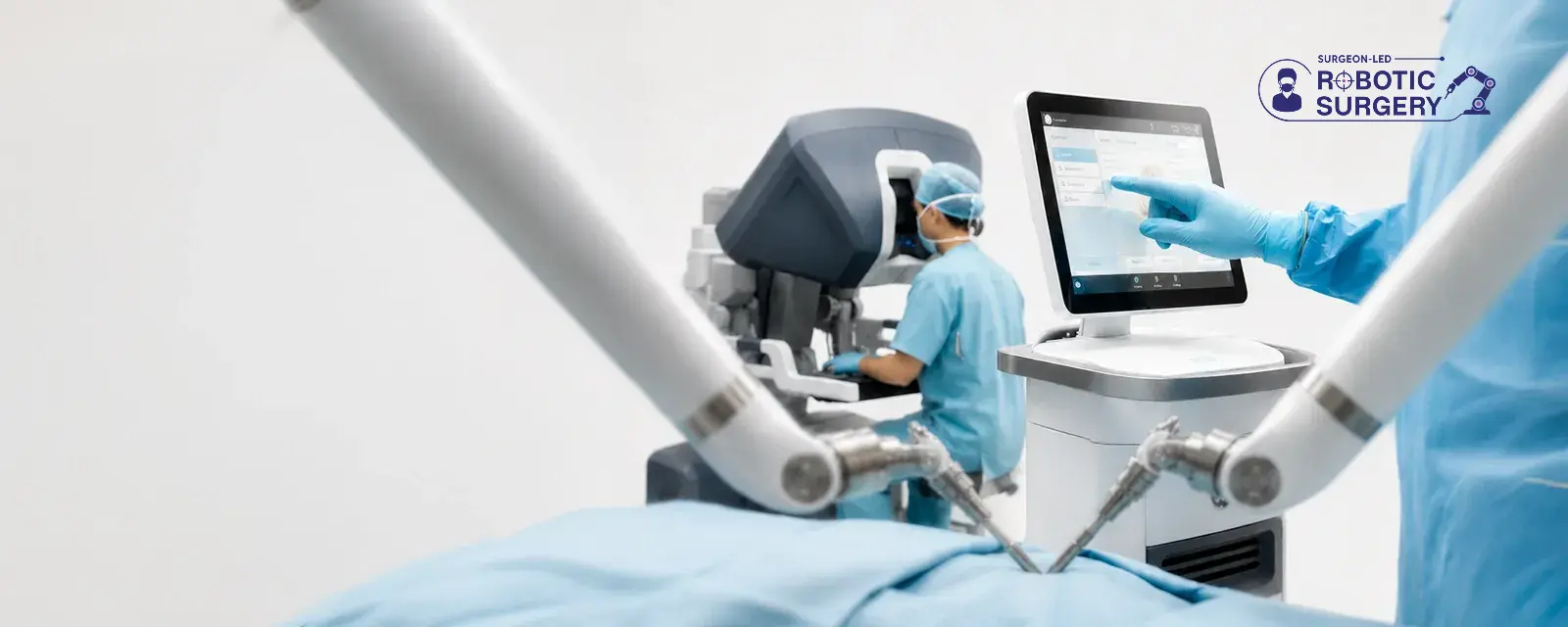
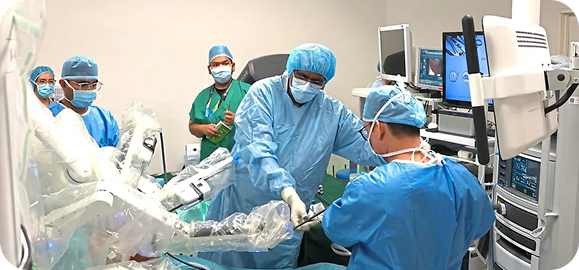
IHH Healthcare Malaysia offers robotic-assisted surgery across its network of eight hospitals, bringing together experienced surgeons, advanced surgical technology and multidisciplinary care teams.
Discover the range of robotic-assisted procedures available across our hospitals.


IHH Healthcare Malaysia brings together experienced robotic surgeons, advanced surgical technology and a network of leading hospitals to provide patients with access to robotic-assisted surgery across multiple specialties.
Whether you are seeking a second opinion, exploring treatment options or preparing for surgery, our team is committed to helping you make informed decisions with confidence.
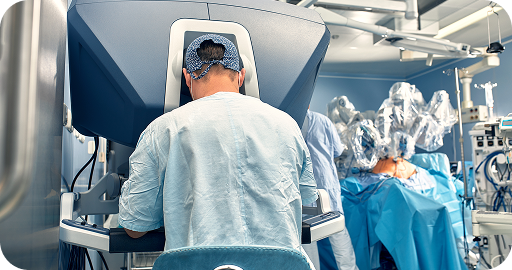
No. The surgeon remains fully in control throuhgout the procedure. The robotic system translates the surgeon's hand movements into precise movements of the surgical instruments, allowing for enhanced control and accuracy.
Robotic-assisted surgery is widely used across multiple surgical specialties worldwide. As with any surgery, risks vary depending on the procedure and individual patient. Your surgeon will assess your condition and determine whether robotic-assisted surgery is a suitable option for you.
There is no one-size-fits-all answer. Depending on the procedure and patient, robotic-assisted surgery may offer benefits such as enhanced precision, smaller incisions, reduced blood loss and potentially faster recovery. Your surgeon will recommend the most appropriate surgical approach for your specific condition.
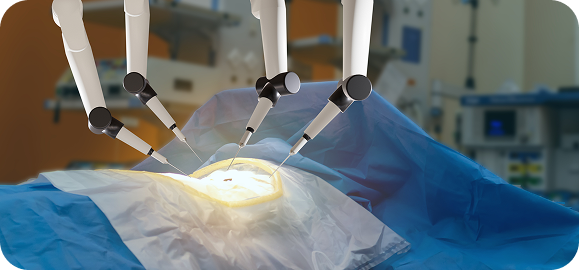
Robotic-assisted surgery uses advanced robotic instruments and a high-definition 3D visual system that provides surgeons with enhanced visibility, precision and control when performing procedures through small incisions.
Many patients experience less post-operative discomfort compared to traditional open surgery due to the smaller incisions involved. However, pain levels and recovery experiences vary depending on the individual and the type of procedure performed.

Robotic-assisted surgery is typically performed through several small incisions rather than one large incision. As a result, scarring is often smaller compared to traditional open surgery.
Recovery time varies depending on the procedure and the patient's overall health. Many patients are able to resume normal daily activities sooner compared to those undergoing traditional open surgery, although individual recovery experiences may differ.
Costs vary depending on the procedure, hospital and surgeon. In some cases, robotic-assisted surgery may be comparably priced to laparoscopic surgery, while in others there may be additional costs associated with the technology used.
Insurance coverage may be available for eligible robotic-assisted procedures, subject to your policy terms and insurer approval. Depending on your coverage, patients may still need to cover part of the treatment costs. We recommend confirming coverage with your insurer before treatment.


Not every patient or condition is suitable for robotic-assisted surgery. Your surgeon will evaluate factors such as your diagnosis, medical history, overall health and treatment goals before recommending the most appropriate treatment approach for you.

Have questions about robotic-assisted surgery? Submit your enquiry.